Mindful Eating for Kids and Families
Practicing mindful eating is a great way for children to learn more about food, where it comes from, and how it makes them feel. It may even make them more willing to try new foods in the future. It might seem overwhelming at first, but you can begin practicing mindful eating with your family by taking a few simple steps. Remember, every family’s mindful eating journey looks a little different, so don’t overcomplicate it! Even just having your child describe how a food smells before eating is a great place to start.
Steps for Mindful Meals
 Engaging Our Senses
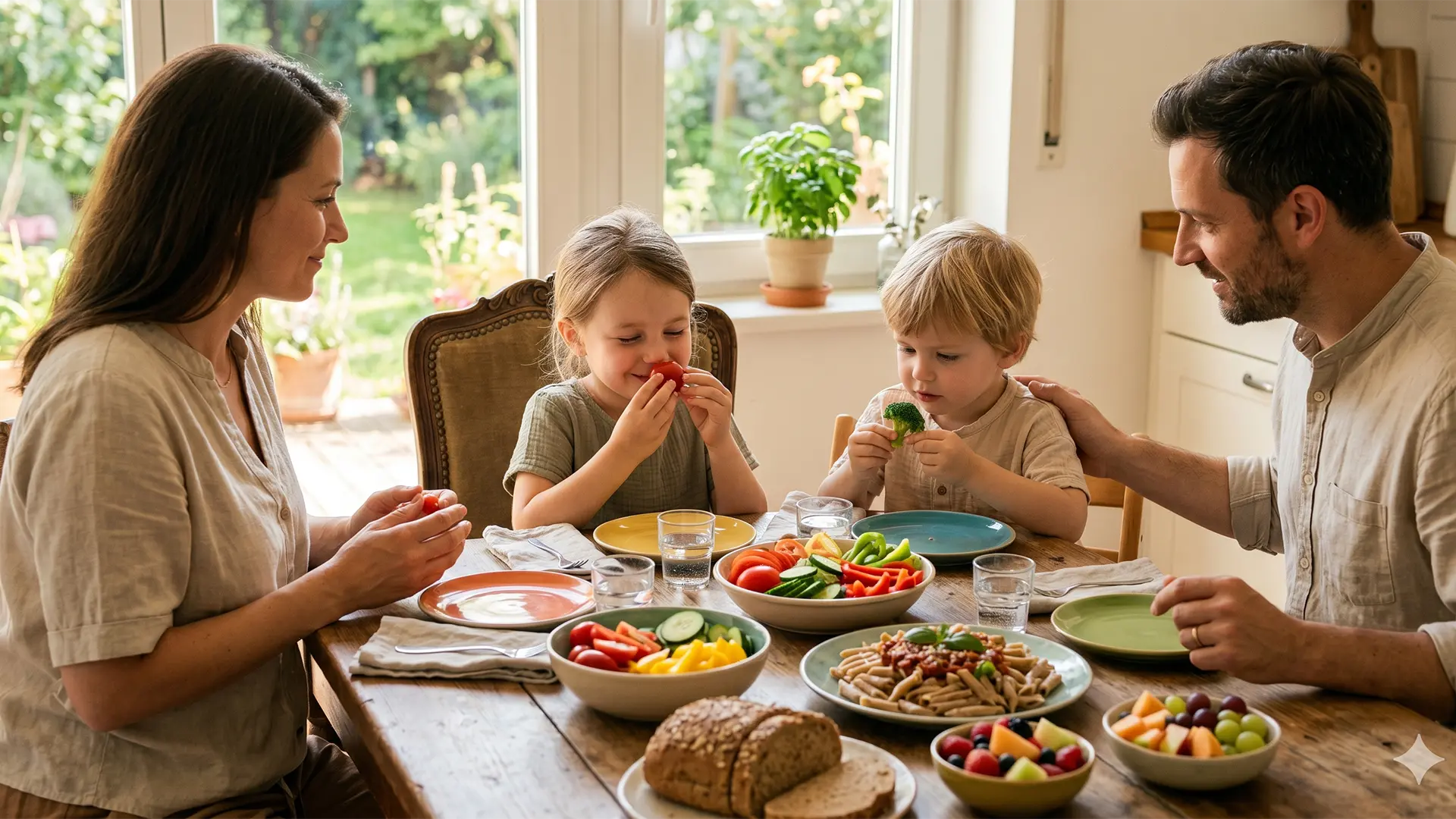
Begin with simple exercises around taste, smell, sight, or sound. Ask children to describe what they observe about their food before eating. If a child is hesitant to try a food, encourage them to explore it using smell, sight, or touch instead. There’s no pressure to take a bite right away!
 Listening to Our Bodies
Take a few deep breaths before beginning to eat to help slow down and tune in. Encourage children to pay attention to how their body feels before, during, and after a meal.
 Clearing Distractions
Eating with the TV or handheld screens on takes the focus away from food and the people around you. Lead by example and stay off your phone at the table will encourage your children to do the same.
 Practicing Gratitude for Nourishing Foods
Before eating, take a moment to appreciate the food on your plate — who grew it, who prepared it, and how it helps your body grow strong and healthy. Even a simple “thank you” for the meal can help young children begin building this habit.
 Sitting Together for Meals
Eating seated at the table together makes it easier to practice mindful eating, encourages conversation, and naturally limits distractions. It doesn’t have to be every meal. Even a few times a week can make a meaningful difference.
More Mindfulness!
Once you and your child have explored these first steps, there are plenty of other ways to weave mindful eating into your daily life. Having a child help prepare dinner helps them understand more about the food they are eating. Growing herbs or vegetables in a garden or on a windowsill can spark curiosity about where food comes from. Continuing to build on hunger and fullness cues helps children develop a healthy, lifelong relationship with food.
The most important thing to remember is that mindful eating looks different for everyone, especially children. Let them go at their own pace, and feel free to try out various exercises to see what resonates. With a little patience and practice, mindful eating can become a natural and enjoyable part of your family’s routine.